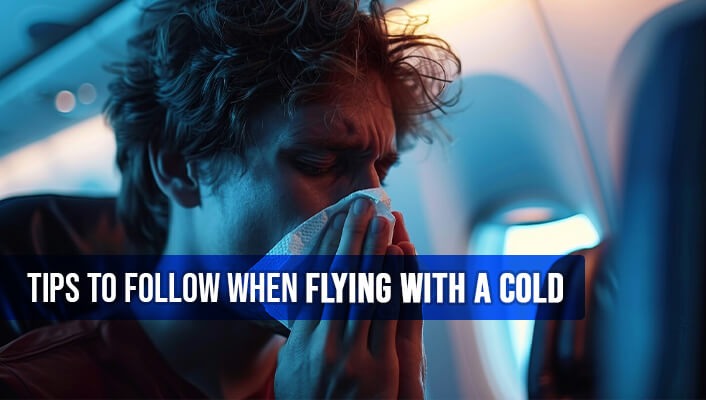
People often book flights well in advance to avoid last-minute seat shortages or high fares. However, advance bookings can become challenging when you develop a cold before your travel date. You may have to fly because of work obligations, family commitments, or other non-refundable plans.
Some travelers also choose to fly because they have already purchased a non-refundable ticket and do not want to lose the money they paid. If your symptoms are mild, you may be able to travel, but you should take appropriate precautions to protect yourself and other passengers.
However, if you have additional symptoms such as fever, significant body aches, vomiting, or difficulty breathing, your illness may be more than a common cold. In such cases, consider speaking with a healthcare professional before traveling.
A common cold usually improves within several days, but flying can make certain symptoms, particularly congestion and ear pressure, more uncomfortable. The following tips can help make your journey more comfortable if you need to fly while you have a cold.
Can You Fly with a Cold?
Yes, in many cases, you can fly with a mild cold. However, you should consider the severity of your symptoms and take precautions to make the journey more comfortable. Here are some things you can do:
- Wear a well-fitting face mask to reduce the spread of respiratory droplets.
- Carry any prescribed or routinely used medication with you.
- Drink enough water throughout the journey to stay hydrated.
- Get adequate rest before and during the flight.
- Use an eye mask, neck pillow, or noise-canceling headphones if they help you rest.
- During takeoff and landing, swallow, yawn, or gently chew gum to help equalize ear pressure.
Is It Dangerous to Fly with a Cold?
Flying with a mild cold is generally fine for most people, but cabin pressure changes can worsen congestion, sinus pressure, and ear discomfort. This is particularly noticeable during takeoff and landing.
If your symptoms are mild and you feel well enough to travel, you can take precautions such as wearing a mask, staying hydrated, and using appropriate measures to manage congestion. However, if you have a high fever, severe weakness, difficulty breathing, persistent vomiting, or other concerning symptoms, consider postponing your trip and seeking medical advice.
A cold can also be contagious. Wearing a mask, covering your mouth and nose when coughing or sneezing, washing or sanitizing your hands, and avoiding unnecessary close contact can help reduce the risk of spreading the illness to other passengers.
If you have symptoms such as fever, pronounced body aches, fatigue, nausea, or stomach problems, they could indicate another infection, including influenza. Consider consulting a healthcare professional rather than assuming that the symptoms are simply a common cold.
Tips to Consider When Flying with a Cold
The following tips can help you manage common cold symptoms and make your journey more comfortable.
Make Plans Only If You Feel Well Enough to Travel
Before traveling, consider whether you feel physically able to handle the journey. If your trip isn't urgent and you can postpone it, giving yourself a few extra days to recover may make the journey more comfortable.
However, if you must travel because of a business commitment, family obligation, or another important reason, prepare in advance. Carry the medicines you normally use or have been prescribed, stay hydrated, and consider speaking with a healthcare professional if your symptoms are worsening or include fever or breathing difficulties.
Stay Hydrated
- Staying hydrated is particularly important when you are feeling unwell. Drink water regularly throughout the journey rather than waiting until you feel thirsty. You may also prefer warm beverages such as tea if they help soothe your throat.
- Avoid excessive alcohol and caffeine, as they may contribute to dehydration or interfere with your rest.
- You don't need to follow a restrictive diet unless certain foods normally upset your stomach. Instead, choose light meals and foods that you can comfortably tolerate during the journey.
Use a Saline Nasal Spray
- A saline nasal spray can help keep your nasal passages moist and may provide temporary relief from dryness and congestion.
- Aircraft cabins have relatively low humidity, which can make a dry or irritated nose feel worse. A saline spray can therefore be useful during a flight, especially if you already have nasal congestion.
- If you use a medicated nasal spray, follow the product instructions or your healthcare professional's advice.
Take Proper Rest and Try to Sleep
- Getting enough rest can make traveling with a cold easier. However, sleeping on an aircraft can be difficult with a runny or blocked nose.
- Try to make yourself as comfortable as possible. Use an eye mask, neck pillow, or noise-canceling headphones to create a more relaxing environment.
- Instead of forcing yourself to sleep, closing your eyes and resting can also help you feel less exhausted during the journey.
Manage Ear Pressure during Take-Off
Ear pressure is a common concern when flying with nasal congestion. Changes in cabin pressure during takeoff and landing can make your ears feel blocked or uncomfortable.
Instead of simply covering your ears, try swallowing, yawning, chewing gum, or sucking on a hard candy during these stages of the flight. These actions can help your ears equalize pressure.
If you have severe congestion, significant ear pain, or an existing ear or sinus condition, consider seeking medical advice before flying.
Conclusion
Flying with a mild cold is possible for many travelers, but it may make symptoms like congestion, a dry throat, and ear pressure more noticeable. Taking a few simple precautions can make the journey more comfortable while also reducing the risk of spreading the illness to fellow passengers.
Stay hydrated, get enough rest, wear a mask, and practice good hand and respiratory hygiene. You can also use a saline nasal spray and take appropriate medication according to the product instructions or your healthcare professional's advice. If you develop symptoms such as high fever, severe body aches, difficulty breathing, persistent vomiting, or worsening symptoms, consider speaking with a healthcare professional before traveling.